Drinking-Water Taste
Tell us when you first noticed it and where it appears.
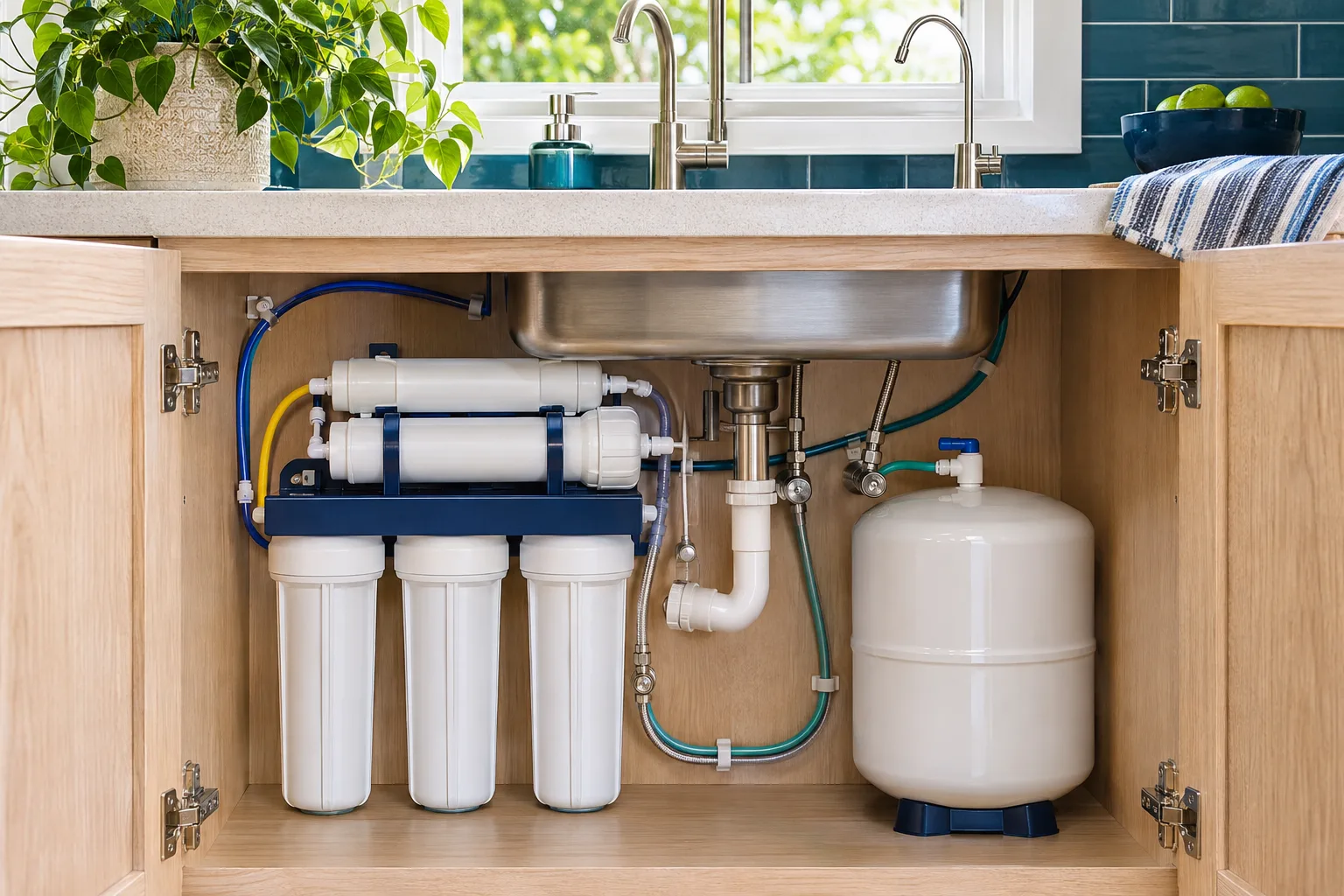
A dedicated drinking-water solution at the kitchen sink.
A reverse-osmosis system adds a focused treatment step where you drink and cook. A membrane and supporting filters can reduce selected dissolved substances, depending on the tested and certified capability of the equipment. We help match that capability to your water and explain the space, pressure and maintenance the system requires.
Start with a conversation about your water source, existing equipment and priorities. The next step is based on what your property actually needs.
Tell us when you first noticed it and where it appears.
Share existing reports or equipment details, if you have them.
We help identify what needs checking before a solution is chosen.
Under-sink systems need room for filter changes, a suitable drain connection and an appropriate faucet arrangement. Some use a storage tank; others have different flow and power requirements. We review membrane performance, wastewater ratio and verified reduction claims rather than treating all reverse-osmosis products as interchangeable. Incoming hardness or sediment may also require pretreatment.
Equipment, installation requirements and ongoing care should be explained together.
Talk Through The Options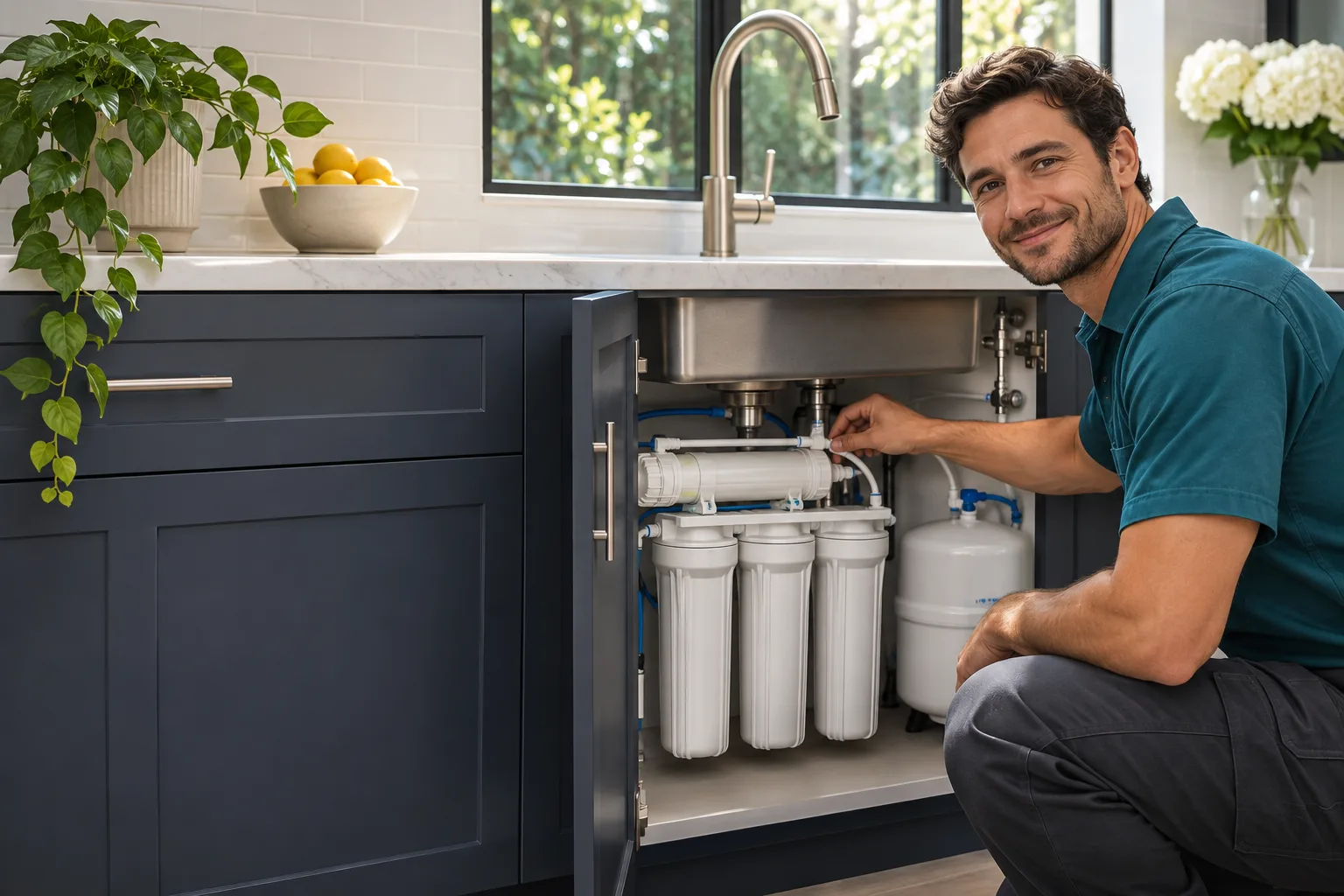
Fit Comes Before Features
A useful solution addresses the right concern in the right place.
Often suited to a dedicated kitchen drinking tap and, where equipment allows, a refrigerator connection. It is not generally intended to supply the whole home. Selection should consider the actual contaminants of concern and the product’s independent certification for those specific reductions.
Access, installation space and maintenance expectations can be just as important as the equipment itself. We discuss those details before a final recommendation.
Review your source, your concerns and available test information.
Compare treatment options, space requirements and ongoing care.
Walk through the system and the maintenance it needs.
Prefilters, postfilters and membranes have different service intervals. Follow the manufacturer’s instructions for replacement and sanitization. A change in taste or output can be a reason to inspect the system, but taste alone cannot confirm water safety.
Keep the model number, service instructions and replacement details in an easy-to-find place. If something changes, ask before making unfamiliar adjustments.
Explore Filter Care
The process produces a reject-water stream. The ratio varies with system design, pressure and conditions. Ask about the expected ratio for the actual installation.
Most under-sink systems use a dedicated drinking-water faucet. We can review available holes, finishes and countertop requirements.
Do not assume that. Treatment claims depend on the specific certified product and operating conditions. Follow local guidance and any boil-water advisory.
The proposed equipment, installation needs and service details should be reviewed with you before work is scheduled. Site conditions can affect the final plan.
Keep the equipment instructions and service record. Follow the recommended maintenance schedule and get advice if water conditions or system performance change.
A confident decision includes knowing the limits, the maintenance and what happens next.
Talk through your water concern and the information you already have.
Ask A QuestionTell us what you notice, what you already know and what you would like to improve.